Samsung R95H Micro RGB vs Sony Bravia 7 II
How the independent professional reviews compare these two products. Higher values are highlighted; a difference of a few points is within normal disagreement between reviewers.
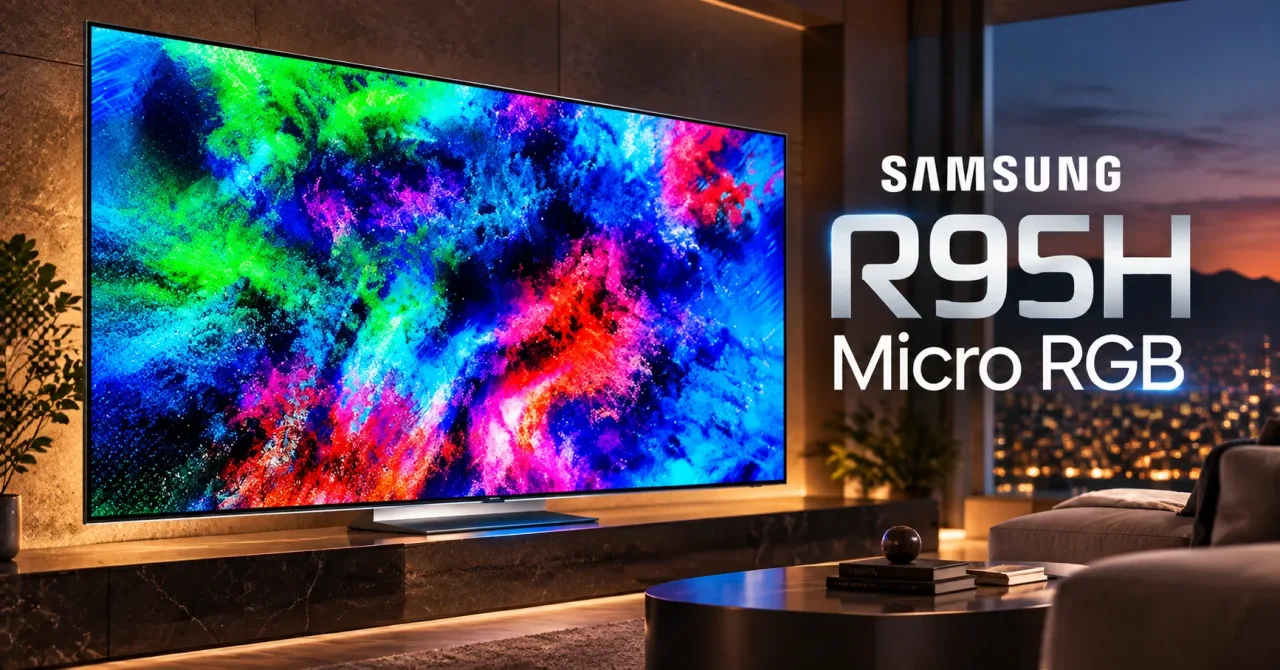
Reviewers agree the Samsung R95H makes Micro RGB real: independent labs measured the widest colour any of them had recorded, 92.4 to 94.1 percent of BT.2020 and roughly 148 to 150 percent of DCI-P3, plus peak HDR of 1,977 to 2,760 nits on a 10 percent window and 612 to 790 nits fullscreen, with four HDMI 2.1 ports at 165 Hz and input lag of 7.3 to 14.2 ms. The split is what those numbers buy. WIRED scored it 6/10, PCMag 3.0/5 Average and called it far too expensive, while ecoustics scored it 5/5 and Expert Reviews gave it a best-buy badge. Every group records the same omissions: no Dolby Vision, no DTS, black levels short of OLED, and blooming, banding and off-axis falloff that run from invisible to the worst the reviewer saw in 2026.
Best for: Bright rooms and daytime viewing. Every qualifying group credits the Glare Free coating, Les Numeriques measured 8% reflectance against the LG G6's 17%, and the 612 to 790 nits fullscreen is brightness OLED cannot match (TechRadar, ecoustics, NeoTeo).; Colour-critical HDR and sport. ecoustics writes that 93.3% BT.2020 easily exceeds flagship OLEDs, Computer Bild calls 92.42% a test-lab record, and TechRadar names Standard mode its preferred setting for sport.; Console and PC gamers who want one set to do everything: 4 x HDMI 2.1 at 165 Hz with VRR, FreeSync Premium Pro and ALLM, 10.4 ms on the set's own ports, plus Gaming Hub with Xbox, GeForce Now and Luna (Expert Reviews, TechRadar, ecoustics).
Skip it if: Your library is built around Dolby Vision. The R95H supports HDR10, HLG and HDR10+ but not Dolby Vision, and it also omits DTS, on every size and in every region (PCMag, WIRED, Pocket-lint, Les Numeriques, Computer Bild).; You watch films in a dark room and want the last word in contrast. PCMag says the similarly priced Samsung S95H OLED looks far better in real-world viewing, and Les Numeriques writes that the R95H needs a drastic price cut before it becomes genuinely interesting.; You often sit off-axis or watch subtitled dark content. Les Numeriques measured a 69% brightness loss at 45 degrees and called the banding the worst it saw in 2026, and PCMag found bloom much more noticeable as soon as you move slightly left or right.
From $3,199.99 at Samsung (US, checked Oct 4, 2026)
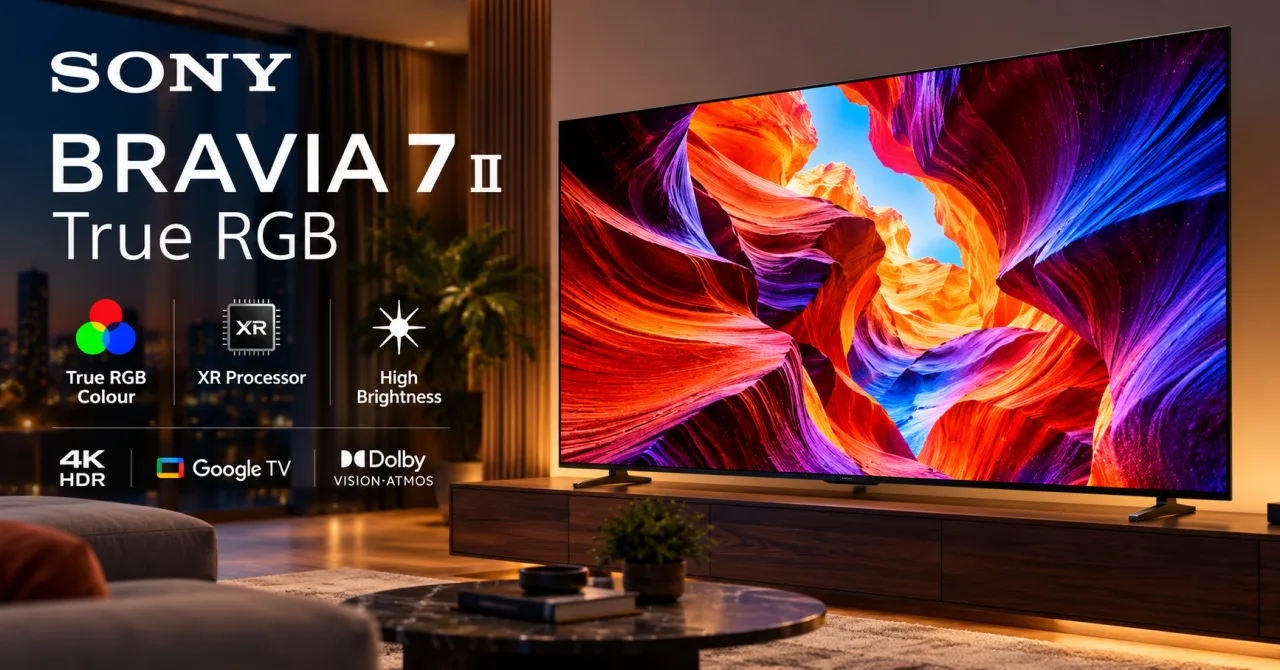
Reviewers agree the Sony Bravia 7 II is 2026's most convincing mid-range LCD: its True RGB backlight is confirmed on this model by every publication read, and it buys colour volume, black uniformity and peak brightness that several reviewers call OLED-rivaling in a dark room. HIFI.DE scores it 9.2/10, Frandroid 9/10, TechRadar 4.5/5 and choose.tv 8.4/10, while CHIP's German school note stays out of the score. The dissent is WIRED's 6/10, which calls contrast and brightness average for the price. The recurring criticisms are price against cheaper OLEDs, weak viewing angles and blooming off-axis, a glossy screen, sound that needs a soundbar, and HDMI 2.1 on only two of four ports.
Best for: Bright rooms and daytime viewing. choose.tv scores it 9.0/10 for watching in bright light, RTINGS measured 953 cd/m2 on a real SDR scene, and Computer Bild and HIFI.DE both call it a bright-living-room set, with Digit and CHIP recording roughly 2,000 cd/m2 peaks.; Film and HDR viewers who want LCD brightness without burn-in risk. RTINGS, The Verge, HIFI.DE, Frandroid, Computer Bild and Digit all record OLED-like blacks in a dark room plus Dolby Vision, and RTINGS notes that LCD panels are immune to permanent burn-in.; PlayStation 5 and Xbox owners. Popular Mechanics calls its PS5 performance amazing, TechRadar measured 10.4 ms of input lag and CHIP 11 ms at 1080p60, and RTINGS, What Hi-Fi? and Frandroid all confirm 4K/120, VRR, ALLM and Dolby Vision gaming.; Buyers who want the True RGB backlight without the Bravia 9 II price. choose.tv says it shows RGB Mini-LED does not have to be reserved for the wealthiest customers, and HIFI.DE calls it a remarkable upgrade over the Bravia 7.
Skip it if: You watch off-axis or from a wide seating arrangement. CHIP measures an acceptable viewing angle of only 40 degrees horizontal and 31 degrees vertical, RTINGS calls the viewing angle mediocre, and TechRadar and HIFI.DE both flag it.; Your room has unavoidable direct light. RTINGS says the glossy coating does very little to reduce direct reflections, TechRadar lists a reflective screen, and Popular Mechanics puts glare in its headline after losing dark-scene detail behind opened curtains.; You want the cheapest route to OLED-grade black. What Hi-Fi?, TechRadar and WIRED all say cheaper OLEDs beat it on contrast, and What Hi-Fi? notes the 55-inch is priced above the LG C6.; Your room is too dark and you expect OLED motion. RTINGS measured disappointing 120 Hz response times and bad 60 Hz transitions, and its review calls fast motion blurry.
From $1,699.99 at Best Buy (US, checked Oct 9, 2026)
Attribute by attribute
| Attribute | Samsung R95H Micro RGB | Sony Bravia 7 II |
|---|---|---|
| Picture quality | 5 positive, 3 negative | 5 positive, 1 negative |
| HDR brightness | 6 positive, 1 negative | 8 positive, 2 negative |
| Gaming | 7 positive, 0 negative | 4 positive, 4 negative |
| Sound | 2 positive, 1 negative | 1 positive, 2 negative |
| Smart TV platform | 3 positive, 2 negative | 6 positive, 0 negative |
| Design and build | 4 positive, 0 negative | 4 positive, 1 negative |
| Value | 2 positive, 3 negative | 83/100 · 3 positive, 1 negative |
Counts are independent sources; scores appear only where sources published one for that attribute.